Closing party featuring The French & Free Choice Duo


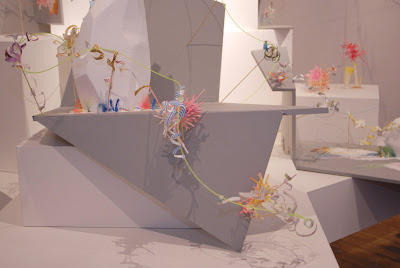
Awesome poster by N Gray


When you're done doing the exhibition opening rounds tomorrow evening, come by Craft Victoria at 8pm for special "anti-drone" performances by The French (playing their second ever show!) and Free Choice Duo (playing their umpteenth opening/closing show - that's a good thing!)

Just so you know, The French are: Nathan Gray (Snawklor, Vortices), Julie Burleigh (Solo, Session musician with Beaches, Mum Smokes etc.) and Bianca Hester (Paeces) and Free Choice Duo are: Jarrod Zlatic (Fabulous Diamonds) and Jessica McElhinney (Troglodyte's Ball).

Click here to go to the Facebook event page for more info.

It'll be a great way to wrap things up for the final week of Nathan's exhibition and we hope you can make it to the closing party.

PS. It was in Three Thousand this week so it's got some cred (right Nathan?!)

In the meantime, to whet your appetite here are some videos of Nathan. The first is an excerpt of a performance with Dylan Martorell that took place earlier this year at Tape Projects in Carlton, and the second is Tudo Que Acho (Everything I Find/Feel), a video produced by Nathan during his residency in Bahia, Brazil.

See you tomorrow!


A two-way with Mr Gray

For today, here's an excerpt of a super-special interview between Nathan and CV's Kim Brockett that was conducted (for the first time) via Skype. Ah technology, bringing everyone closer together without the awkwardness of real-life interaction...

I know interviews are traditionally posted on Fridays, but hey, let's walk on the wild side and post it on Tuesday instead.

Featuring exhibition documentation of Nathan's Gallery 1 installation by CV's new photography intern, Esther Van Doornum. Thanks Esther! They are awesome, great job!


Your current exhibition spans across all three galleries. Did approaching this large amount of space provide any challenges? Or did you have a clear idea of it from the start about how you wanted your work to progress?
I think I find limitations harder to deal with than large spaces! But it did provide me with a unique opportunity to put on essentially three different but linked exhibits. And no, I rarely have a clear idea of what I am doing – I listen to my materials, do lots of experiments and try to think about what sort of music the piece or pieces will make. When I finally come to the installation process, I still leave a portion completely unplanned as you can never account for everything and you want to make the thing feel alive.

And in this case which was the unplanned portion?
Hmm, well I knew I would knock down heap of plinths and deck the halls with a whole load of string but not precisely how. I also always make more things than I need so there’s no risk of having to cut something and being left with an uncomfortable space.


Were there any ideas you had prior to installation that didn't quite work out in the end?
Sure there were. I thought it might be nice to historically contextualize the space, but that fell by the way side. I also wanted to continue the installation out into the street somehow but that was too hard. These ideas are both going to be incorporated into my next work, at Gertrude Contemporary Art Space’s (GCAS) studio artists show.

Oh yeah, both ideas would have been nice.
Sure, but now it seems to make more sense to me, as my wish for GCAS is to have it linked to its community and history, which is somewhat hidden. In terms of indigenous activism the area used to be on par with Redfern for example, but that part of its history is not immediately obvious. I think it feels a little divorced from the community in the neighbourhood, for example the Atherton Gardens flats.


Starting with such a large-scale installation in gallery one, progressing to a 2D/soundscape in gallery two, and finishing with a comparatively minimal sculpture in gallery three, what sort of experience are you hoping to create for the visitor?
I don’t know about my intentions, but it kind of reads like a whittling away. Each piece is based on the same ideas and intentions and these intentions become reduced down to bare essentials over the course of the rooms.

How did you go about creating the sound in gallery two?
Well I just used a tone on my synthesizer a bass tone which when played goes slowly through a system of effects to create the mids and then the treble. I wanted to make something that effervesced – something that progressed from being very concrete and solid that dissolved upwards. This was the basic compositional idea for the installation, drawings and sculpture in gallery three too. I also wanted each piece to be made up of episodes, a return to a starting point in which the same set of elements had the opportunity to develop in different ways.


And this is your reflection upon musique concrète I imagine! How did you discover it?
I discovered it from smarter, older people than me, who thought I would appreciate it because I was making music using a very similar process. And to clear up a small misunderstanding, musique concrète is music originally made on tape recorders which uses real world sounds to make music. So it’s early sample-based music but of course more avant-garde sounding. I thought this magpie attitude to music making and collecting and structuring objects in space all seemed to tie together. This show however is based more on synthesis, so it is based much less on found objects and more on created or synthesized objects, not musique concrète. I was actually listening to a lot of Cluster, Brian Eno and (German electronic music composer) Klaus Schulze – anything made on a synthesizer as I had just got one and was falling in love with it. I was also listening to lots of dubstep which at its best seems to me a very tonal, nuanced form of dance music with the beat stripped back and this lush synthesizer middle.

That's a really interesting description, ‘magpie attitude’. You are kind of like a magpie!
I guess the phrase is magpie but the bowerbird does it best. Recently I went to the mountains and saw some lyrebirds, which is like a sonic bowerbird. It imitates everything it hears and then fires it back in these virtuoso performances that go from wind in the trees, to every bird in the forest, to cows and even chainsaws. It was very educational, very musique concrète.

The world is amazing.
Yes it is.


So leading on from that, colour has also always played a defining role in your work.

Yeah it's hyper colourful. I feel like that’s a way of avoiding colour decisions really, by just cranking up the saturation and using every colour. It also makes the work seem unfamiliar, as a lot of my palette doesn’t exist in nature and only very recently existed in paints. I like the idea of cutting people a bit adrift and using devices which force them to interpret the work in personal ways. We are expert pattern recognisers as a species and will recognise actual objects in the most abstract things, especially people. All you need is two dots and a line and it's a face, it’s hard to see it as anything else.

That’s very true... :)
That’s why I’m increasingly drawn to abstraction, but people seem to interpret these layered abstractions as miniature landscapes, almost always.

And by abstraction, do you mean consequently making it challenging to recognise patterns? Would the ideal situation be something along the lines of creating something totally unrecognisable?
Yeah exactly. It’s also because music is itself very abstract and Wassily Kandinsky and many others compared their work to music. It has no specific reference to the world. For me I like not to have fixed meaning to my work and to leave it open-ended.


So with the music in gallery two it’s impossible to recognise that it has come from recordings you took in the gallery – success!
Yes. I wanted to conceptually link it back to the space. Like the way a piece of art needs to be exhibited and all the things around it taken into account. Music sounds very different in different spaces.

I imagine the ambiguity would be really difficult for some to understand, especially since these days we want almost everything, information included, immediately and instantly.
I know! And the point is really to be egalitarian. Like you don’t need to be educated in art or anything at all to appreciate it. However I do understand that people are not used to being given the reigns of meaning. We are most literate in advertising as visual culture and there is a lot invested in it being read in only one way. I think this is the strength of art. You know you will have to rely on yourself to some degree when you look at art and with my work it’s a lot. With others you might have to research, but mine you must explore. Though I do spend a lot of thought about how I DON'T want my work to be interpreted so it’s not completely open. Even when I use found objects the abstraction is in their relationships and I want to achieve a state where objects are re-evaluated.


Your combination of colour and music calls to mind synesthesia... you mentioned Kandinsky, who was a synesthete.
Kandinsky was a synaesthete? I knew Olivier Messiaen was but I suspect that that he was faking. Yes perhaps it looks synesthetic. But I am not trying to create interpretations of the sound, rather looking at the way similar compositional practices play out in different media.

Apparently Kandinsky was! I Bing-ed it and it told me so.
Ah BING!

A week of Nathan Gray

Image from UHH.com Photography by Suleyman Karaaslan


In celebration of the final week of Nathan's exhibition Attack Decay Sustain Release, we've decided to devote this week's worth of posts to covering his most excellent show.

To kick things off, check out this awesome interview that our pal Dan Rule recently conducted with Nathan that was published on Sydney website UHH. There are also some great photos on it, including a stunning Portrait of Nathan Gray (haha! couldn't resist!)

Nathan's show ends this Saturday 17 October. If you haven't already, click here to download the ADSReader, a collection of six essays authored by James Deutsher, Francis Plagne, Jared Davis, Helen Johnson and Simon Taylor. You can also pick up hard copies of the catalogue from Craft Victoria - lovingly assembled by Nathan himself. That's dedication for you...

Introducing... Kyoko Osato

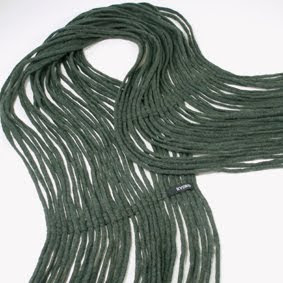
It's Friday again, and this week meet textile artist Kyoko Osato. Hailing from Japan, Kyoko is a master of felted wool and her delicate scarves, neckpieces and wraps mimic the soft movement of marine fauna such as seaweed and the like. Based in her home studio in Melbourne, Kyoko weaves on a floor loom and felts with a pair of trusty yellow gloves.

You may remember Kyoko's recent enCOUNTER exhibition Handwoven that took place earlier this year (click here to revisit it). We also have a whole range of Kyoko's scarves in stock at the moment and with the cold snap that's going on at the moment, you'll definitely be needing something warm and soft to snuggle up against.

Happy Friday everyone! See you at Craft Hatch tomorrow.


What prompted you to move to Melbourne to pursue Textile Design at RMIT?
I lived here a couple of times before I came to study at RMIT. Every time I live here, things go really well and I get a good vibe from everything Melbourne offers. When I was thinking what I could do to live in Melbourne, I found this Textile Designs course at RMIT. I applied and got accepted.

Why Melbourne?
I liked a photo of a tram, old green and yellow one, in a guide book when I first decided to come to Australia with a working holiday visa back in 1994.


After completing your studies you then moved to the UK for two years. What was that experience like?
I did some markets in London and Edinburgh. Not only people living in UK, but also people visiting UK from all over the world who visit markets. So many people gave me their honest feedback, all sorts of feedback, and told me if my work would fit into their own countries or not. For me, having a stall at a weekend market in London and at Edinburgh Fringe Festival were the best places to do some research. Living in UK for two years gave me a huge confidence in what I make and made me decide to be serious about it.

What brought you back to Melbourne?
From the beginning, I wasn't going to stay in UK for more than a few years. After staying there for two years, I was ready to come back to Melbourne to settle down and concentrate on my weaving business.

What encouraged your interest in textiles?
My mother is a dressmaker so I grew up with sewing machines and fabric. A fabric shop for me is like a bookshop for some people. I still spend hours in a fabric shop. Before I started studying at RMIT, I was more into making things on a sewing machine such as my own clothes and bags. I always liked textiles. When I learned how to weave at RMIT, I really enjoyed the whole process. In my second year at RMIT, I started using feltable wool for the first time for some of my weaving projects and slowly learned what I can do with the feltable wool combining with weaving techniques. I haven't stopped using it since. I try to use something else but I keep going back to feltable wool.

Could you tell us about your design approach and inspiration behind your work?
I tend to choose some organic names but I don't start from choosing a name or theme and start working towards it. I start from thinking about different weaving structures I can do on the loom and how they turn out after felting process. All my designs start from sampling and testing these structures. I always try to achieve something more than a flat piece of fabric which traditionally the weaving loom is used for.

I get inspired by shapes and abstract images found in natural objects. But I don't try to design towards them. I think the images stay at the back of my mind and when any of the samples meets the images, that's when a scarf is born and I give a name for it.

How do you think textiles is approached differently here in Australia in comparison with Japan?
It’s a difficult one to answer because I wasn't interested in the making side of textiles before I came to Australia. From what I can see, in Japan it looks like textiles influenced by the Japanese traditional style is still very strong, especially in weaving.


Tell us about your studio space…
My production work, weaving and felting, happens in the studio at the back of my house. We use it as a studio space but actually it's a garage. I share this studio with my housemate who is an artist. I weave and he paints, he's a great company to share the space with. Having this studio outside the house, even though it's only six steps away from the house, helps me focus when I am in there. Especially when I'm busy with orders, I pack a bag with enough materials to work with for a day, such as yarn, so that I don't need to go back into the house except when I make a cup of tea or lunch. I do my computer work and preparation for weaving in my bedroom which gets a lot of natural light.

How do you overcome creative obstacles?
Wait.
While waiting, do anything creative such as sewing and cooking to motivate myself or go through weaving books, pick a traditional weaving structure I've never tried before and weave it for fun.


And last but not least, out of all the designs you’ve ever made, is there a design that is particularly special for you?
The lattice scarf (pictured above, in 'seaweed'). I made this scarf for one of the projects at RMIT. Some people including teachers bought the scarf. This is also the scarf which was chosen to be used for the brochure image for the Scarf Festival 2004 at Craft Victoria. This scarf woke me up to what I do now and still keeps bringing in new smiles.

Craft Hatch: 10 makers on the 10th

Sharon Margaret Russell


It's that time of the month again - Craft Hatch time! Coming up this Saturday 10 October, get ready for yet another ultra-exciting edition of Craft Victoria's market for emerging makers.

It's 10 makers on the 10th, making it 10 out of 10! (ooh)

Don't forget we'll be giving away preview passes to see Woody Allen's new film Whatever Works. Get in early if you don't want to miss out!

Here's a sneak peek at what to expect:

Graduating students from RMIT Gold & Silversmithing (Fiona Simmons' work pictured)


Rebecca Williams

Rachel Cooper


Maureen Kiernan

Jessica Hyde


Gemma Patford


Elena Low


Berri Drum

Annemarie Blades

Craft Hatch: this Saturday 10 October at the City Library gallery, 253 Flinders Lane between 11am and 4pm.

Write that down!

Online shop: now open for business!

our first online shop order was shipped off today!

Too busy?
Too far away?
Too lazy to move?

We've got good news for you then! COUNTER has recently launched an online shop and you can now peruse through goods from Kearnsie, Chris Plumridge, Edwina Bolger, Sneak Design, Scotatto, Emerge and a range of publications. Expect more makers to be added over the coming weeks!

Now you can shop without having to change out of your pajamas. Perfect.

As a special incentive, you'll receive 20% off all online shop orders throughout the month of October. Remember to key in super secret special awesome code LOOT at checkout to receive your discount.

'Whatever Works' giveaway at Craft Hatch this Saturday


Our lovely friends at Hopscotch have kindly given us a bunch of complimentary double passes to see Woody Allen's new film Whatever Works starring Larry David (oh boy! we're LOL-ing already). The passes are valid for the theatrical season of the film at selected cinemas including Nova, Palace Kino and Hoyts Chadstone.

If you'd like to get your paws on an in-season pass, drop by Craft Hatch this Saturday between 11am and 4pm to collect your ticket. Craft Hatch is located in the gallery space at the City Library, 253 Flinders Lane. Limited quantities available!*

*When that runs out, we also have plenty of passes valid for screenings this weekend.

Introducing... Emma Sher

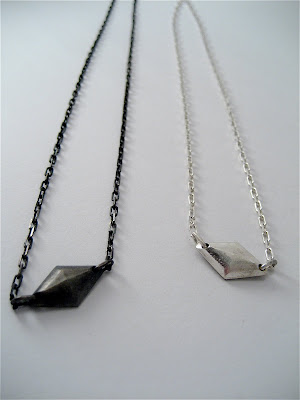
This week, meet one of COUNTER's newest stockists, Melbourne-based jeweller Emma Sher. A recent graduate, Emma's seriously covetable jewellery is a contemporary exploration of agate, crystals and pearls. Emma begins her creative process by focusing on the qualities of the materials - their geometry, colour and tactile qualities - and you can see the fruits of her labour in the images below.

Without further ado, happy reading and happy Friday everyone!


About me…
I have always been creative and loved jewellery, so after working at a fashion accessory company I thought I would try my hand at jewellery through a short course. I then enrolled into TAFE, which led me to complete a Bachelor of Fine Arts in Gold and Silversmithing at RMIT.


About the materials I use…
Faceted stones reflect my love of anything sparkling, and I love colour! I try to turn agate into something more special than it has been perceived as before. I focus on how the special combination of elements relate to each other, and the way in which they can be transformed into a unique piece of jewellery. Careful thought is given to the construction of each piece and the way it sits on the body.

My other range of jewellery Chrystallization is the geometric imagery of the internal crystal system of gems, etched onto precious metals.

I find gemstones are so prevalent in a large amount of jewellery, both traditional and contemporary, I am just trying to look at them in a different way.


About my solo show at Charles Smith Gallery (3 March – 4 April 2009)…
My exhibition Progression, revealed my gradual transformation from my early years of study and design into a professional jeweller. It also expressed my growth as an artist. Initially I didn’t have a theme for my exhibition, which was great as I could go forward freely... however, along the path of creation, I realised that Progression held another meaning… the progression from piece to piece. Each work became a further refinement of what had been learnt from creating the one preceding it.

The greatest challenge that I encountered was getting everything together on time in line with my vision- from the invitations to the setup, to of course the jewellery itself. My greatest achievement was producing a successful exhibition with a total of fifty new works.


I get inspired to create when…
I get excited when I come across some new precious beads, pearls or interesting gems… I group them together and explore design concepts.


And when I encounter a creative obstacle…
Sometimes if I’m not getting anywhere I need to leave the studio and go on the hunt for something to inspire me... my studio is near Smith Street so I go and have a look in some lost and found shops, or go into the city to look in galleries.


My favourite work would be…
That is a really hard question! By the time I have completed a piece I have a ‘connection’ with it, I sort of get attached and want to keep it!

One of my first agate works was a mauve agate pearl and sapphire necklace. I tried to give it to a gallery to sell, but I just couldn’t do it! I also think it’s important to keep one of the first pieces you make, as a reminder of how far you have come.

My latest favourite is a white agate, blue lace agate and silver necklace.


In the future…
I am continuing on with the agate range for some retail galleries, I love making them. I am focusing on some earrings for this range too. There will be some new pieces in the Chrystallization range also. I have an idea for my next exhibition, but it’s all under the hat at the moment!


OMH


via flickr from andrewwantcoffee

Driving on the south yarra side of the yarra I noticed this piece by Ugo Rondinone, which is in a similar style to the HELL YES piece thats on the front of New York's New Museum. Apparently it was bought by Sportsgirl Richmond(!).

A Field Guide To Hyperbolic Space

"Crochet Coral and Anemone Garden" with sea slug by Marianne Midelburg.Photos © The IFF by Alyssa Gorelick.

Friends of mine recently put an exhibition on of a crocheted coral reef in the Sydney powerhouse museum. Its a project originated by two Australian Sisters living in the US, Margaret and Christine Wertheim. Their coral forms were based on the technique of hyperbolic crochet discovered by mathematician Dr. Daina Taimina. These hyperbolic forms are present everywhere in nature including in reef organisms but were difficult to model until Taimina hit upon the idea of using crochet.

"Each crochet model results from the application of an iterative recipe. Like fractals, such as the Mandelbrot Set, these forms come into being through the process of doing a small set of steps again and again and again. Though experience often serves as a guide, there is no way to know in advance what a specific algorithm will produce and we have many times been surprised when seemingly insignificant changes in the underlying pattern led to fundamentally new results. In a very real sense, this is a kind of experimental mathematics and we invite crocheters everywhere to explore for themselves the possibilities inherent in these techniques."

From
The Institute for Figuring (IFF) website.

The Institute for Figuring which is the organisation formed by the sisters has a site with crochet instructions, pictures and maths you can also see one of the reef's creators talking at this year's TED conference here.


Further investigations would require a look at the work of Ernst Haekel turn of the century biologist and illustrator.

Fringe Furniture 2009

Recently, CVHQ ladies Beck Jobson and Nella Themelios were invited to judge Fringe Furniture 2009. The theme of this year's event was 'Silver' and participants were invited to enter work that reflected the characteristics of the material:

As the world around us is engulfed in a light shade of grey, Fringe Furniture 2009 is set to radiate a lustrous shining light of optimism. This year's theme, SILVER, encouraged designers to explore the visual, physical and symbolic properties of this bright metallic. The Arts House, Meat Market will host this dazzling melting pot of new ideas, integrating the iconic Fringe Furniture exhibition into the very heart of the festival.

We don't doubt for a minute what hard work it must have been... taking a few hours off work to wander around covetable objects and picking out the best. It's a tough life being a Fringe judge!


With around 80 entries to select from, it is with great pleasure that we announce Marcus O'Reilly as the very deserving winner of Fringe Furniture 2009! Marcus' golden effort Flotsam and Jetsam (pictured above) is a table constructed from various found materials, for example bits of wood gathered from beaches. As Marcus describes:

"Silver is for second prize, the materials used are all scrounged materials, being used second time round. And, as they are used more or less as found they are as tarnished as silver."


Congratulations Marcus! As part of his prize, Marcus will be exhibiting at enCOUNTER sometime in 2010.


Also highly commended was Toby Horrocks' ingenious folded cardboard creation, Mountain Display Table (pictured above) and Gordon Tait's Brilliant made from corten steel with a rust finish (pictured below).

Don't be fooled by the rock that she's got, she's still Nella from CVHQ

Natalia Milosz-Piekarska


During the fabulous Nicholas Building open studios event, a group of us from CVHQ trotted down to poke around the studios, many of whom are COUNTER stockists. We popped by the amazing Natalia Milosz-Piekarska's studio (which she shares with Karla Way) and there was much ooh-ing and ahh-ing at Natalia's amazing design aesthetic. It's out of this world!


Natalia recently dropped off some great earrings the other day (pictured below). The studs with the gold dots have been snapped up already... but the rest are still here and waiting to be taken back to a good home!


The image above is from Natalia's blog, the very aptly-named 'ahhness', which you should totally check out for more images and info. It'll give you something to save up for till next payday...

Search This Blog

Followers